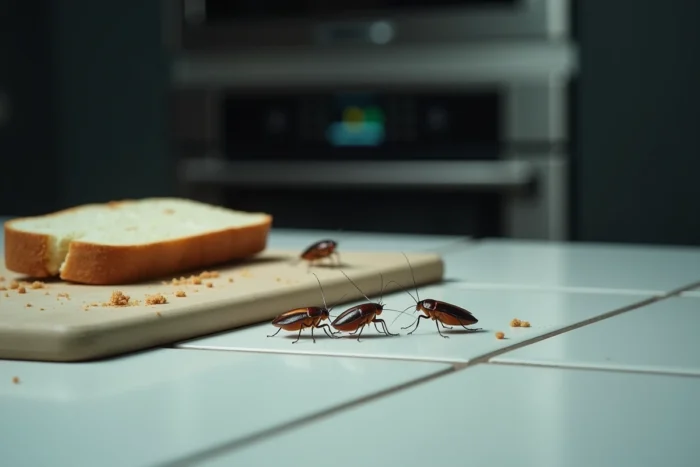
Most of the insects we find in the kitchen exploit a scotophilic behavior, meaning an active preference for darkness. Cockroaches, silverfish, springtails, or food moth larvae do not “come out” at night by chance: their circadian clock triggers locomotor and feeding activity as soon as the light level drops below a critical threshold. Understanding this mechanism allows us to target interventions on the right levers, at the right time.
Scotophilic behavior and circadian rhythm of kitchen insects
German cockroaches, the dominant species in urban habitats, concentrate their search for food and water in the two to three hours following the lights going out. This window corresponds to the peak activity dictated by their neuroendocrine system. Observing individuals during the day is a reliable indicator of overpopulation: daytime refuges are saturated.
Silverfish (Lepisma) follow a similar pattern, but with additional sensitivity to humidity. They only leave their hiding spots when the relative humidity exceeds a certain threshold, which explains their frequent appearance under the sink or near the dishwasher after a nighttime wash cycle.
To delve deeper into the subject, the insect ophones on Animal Liberation detail the attraction mechanisms and health risks associated with each common species.
Food moths (Plodia interpunctella) present a different case. The adult, a small gray-brown moth, flies towards residual light sources (night light, standby LED of a device). In contrast, the larvae remain strictly confined within the food items, invisible until the infested package is opened. We often observe that the report of “moths in the kitchen at night” corresponds to an already advanced larval infestation in the cupboards.
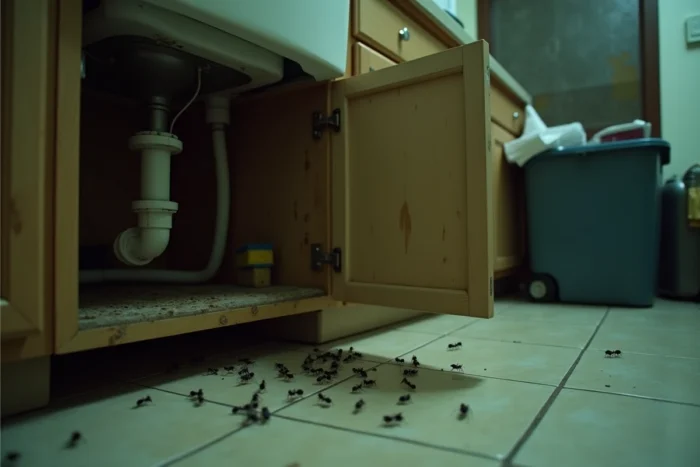
Identify the nocturnal insect before any intervention
Treating without identification amounts to applying a protocol blindly. The most common mistakes consist of confusing springtails and psocids, or mistaking a flour tribolium for a dermestid. Each species involves a different mode of action.
Clues to note during a nighttime inspection
- Precise location: an insect found in a cereal bag points towards food moths or weevils, while an insect scurrying along the baseboard will indicate cockroaches or silverfish.
- Size and morphology: springtails measure less than two millimeters and jump when disturbed. Adult German cockroaches reach about one and a half centimeters with two dark longitudinal stripes on the pronotum.
- Associated traces: cockroach droppings resemble fine coffee grounds deposited along joints. Filamentous webs in a flour bag signal the presence of Plodia interpunctella larvae.
- Reaction to light: an insect that instantly flees towards a crack is likely light-averse (cockroach, silverfish). A gnat that stays in place or flies towards the bulb is more likely a drosophila or psychodid.
We recommend placing non-toxic sticky traps in three strategic areas (under the sink, behind the refrigerator, inside a food cupboard) for three consecutive nights. The results provide a reliable sample to identify the species present and estimate the infestation pressure.
Eliminate the three key resources: food, water, shelters
Without simultaneous access to food, water, and a dark refuge, no insect population can sustain itself long-term. Eliminating just one of these three factors is often enough to reduce the population below the nuisance threshold.
Food and storage in cupboards
Dry goods (flours, cereals, dried fruits, spices, pet food) are the primary targets of food moths and weevils. Systematically transferring them into airtight glass or rigid plastic containers cuts the larval cycle at the source. An opened package left in a cupboard can host several hundred eggs within a few weeks.
Crumbs and greasy residues behind the stove or under the toaster feed cockroaches and ants. Targeted cleaning of these areas, including the perimeter groove of the countertop, significantly reduces the site’s attractiveness.
Moisture and water points
Even a tiny leak under the siphon creates a micro-habitat sufficient for silverfish and springtails. Repairing any leaks and ventilating under the sink breaks the reproductive cycle of these hygrophilic species. After the last use of the evening, wiping the sink and emptying the saucers under houseplants removes the nighttime water source.
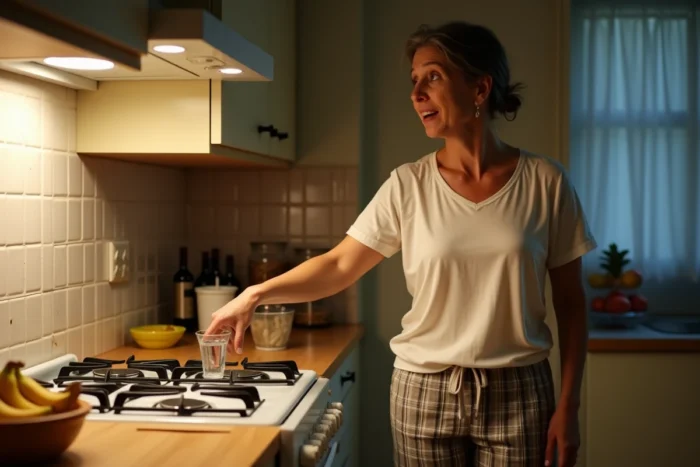
Shelters and entry points
Cockroaches exploit gaps of a few millimeters. The areas to inspect as a priority include: the junction between the countertop and the wall, pipe passage holes, and the space between the baseboard and the tiles. A silicone sealant or steel wool (for wider openings) can seal these access points.
Traps and natural repellents: what really works in the kitchen
Homemade solutions circulate abundantly, but not all have the same effectiveness depending on the targeted species.
Against gnats (drosophila), a trap made of apple cider vinegar covered with a pierced film remains the most effective device in domestic settings. Drosophila are attracted to volatile acetic compounds and drown upon contact with the liquid.
Against food moths, pheromone traps capture adult males and allow tracking the evolution of the infestation, but are not sufficient to eradicate it. They must accompany a complete sorting of food items and a cleaning of cupboards with white vinegar.
Essential oils (peppermint, lemongrass, bay) have a temporary repellent effect on ants and certain gnats. However, they have no documented impact on German cockroaches, which have a high tolerance to terpenic compounds. For a confirmed cockroach infestation, only an insecticide gel based on fipronil or boric acid, applied in micro-droplets in identified refuges, yields lasting results.
When the infestation persists despite the removal of resources and the placement of traps, consulting a pest control professional becomes necessary. The German cockroach, in particular, develops resistance to classic pyrethroids, and a diagnosis by a specialist allows for adapting the chemical protocol to the local resistance profile.
The most underestimated factor remains regularity. A monthly nighttime inspection with sticky traps detects any recolonization before it becomes visible to the naked eye. Episodes of high summer heat accelerate the reproductive cycles of cockroaches and gnats, making monitoring even more necessary between June and September.