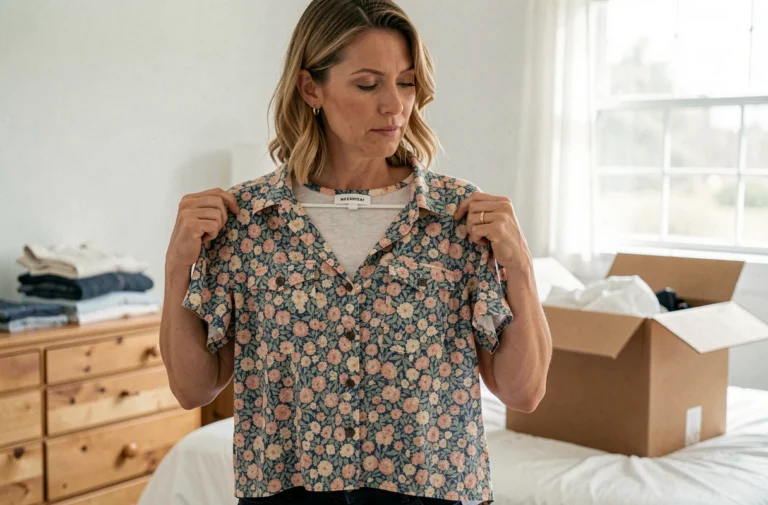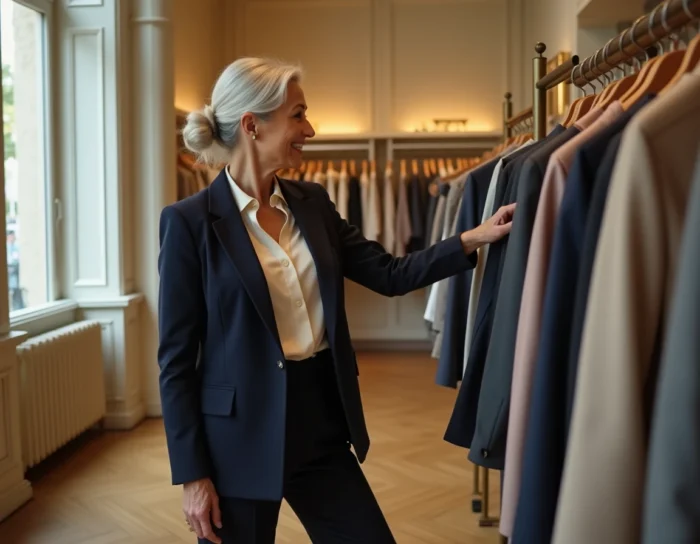
After 75, the wardrobe is not just a matter of taste. It involves choices of materials, cuts, and closures that take into account mobility, skin sensitivity, and daily movements. Staying elegant and modern at this age relies on technical as well as aesthetic decisions.
Adaptive Clothing: When Fashion Integrates the Body’s Constraints
Most style guides for senior women talk about flattering cuts and harmonious colors. They overlook a segment that truly transforms daily life: adaptive clothing.
These pieces are designed to be put on while sitting or in bed, thanks to back openings, magnetic closures, or discreet side zippers. The co-design study conducted with ASOS between 2024 and 2025 (project Tilting the Lens) showed that the goal of these garments is to preserve autonomy, comfort, and dignity at the same time.
The market is evolving towards models that resemble classic clothing, including for formal occasions. This evolution meets a demand for discretion: a well-cut adaptive dress no longer stands out from a standard dress in a store window.
Details like back closures or access points for medical devices remain invisible once the outfit is worn. Seeking information on the Olivia Style website for senior women allows you to visualize outfits designed for this balance between practicality and style.
Materials and Cuts Suitable for the Silhouette After 75
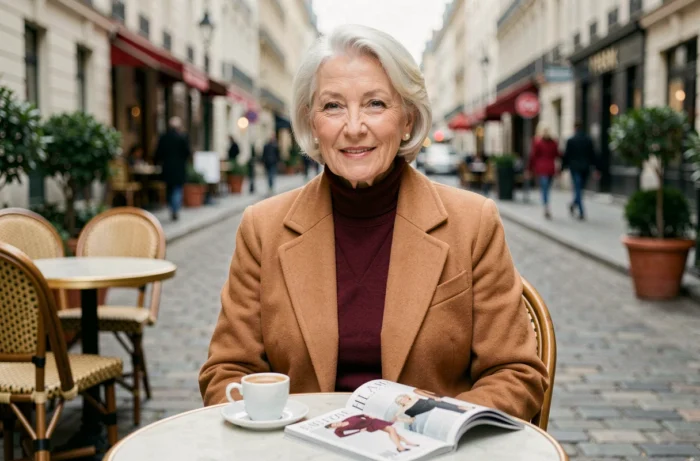
The choice of fabric determines everything else. Cotton, linen, and viscose remain the most reliable materials for mature skin, which tolerates tight synthetics or rough fibers less well.
Prioritize Breathable Fabrics Year-Round
Thermoregulation changes with age. A breathable fabric prevents excessive sweating in summer and limits discomfort under a warm layer in winter. Crinkled linen embraces its natural look and adds character to a simple outfit. Viscose provides fluidity without weighing down the silhouette.
Lightweight stretch materials (with a low percentage of elastane) facilitate movement without giving a sporty appearance. They work particularly well for trousers and straight skirts.
Cuts That Structure Without Compressing
After 75, the waist often rounds out and the back slightly hunches. Three cutting guidelines deserve attention:
- The trapeze cut for tops and dresses, which hugs the shoulders and then flares out without marking the belly
- Pants with an elastic waistband and a front pleat, which combine ease of wear with a structured line
- Unfitted jackets, slightly shortened, that elongate the silhouette without constricting the bust
A slightly flared cut corrects the silhouette better than a fitted garment. The goal is to create volume where it flatters (shoulders, bust) and let it float where the body has changed.
Color and Accessories: Building a Personal Style After 75
Wearing color after 75 is not bold; it’s a concrete lever to energize an outfit. Neutral tones (beige, navy, gray) provide a solid base, but a touch of bright color, even limited to a scarf or bag, changes the overall perception.
Colors That Work Near the Face
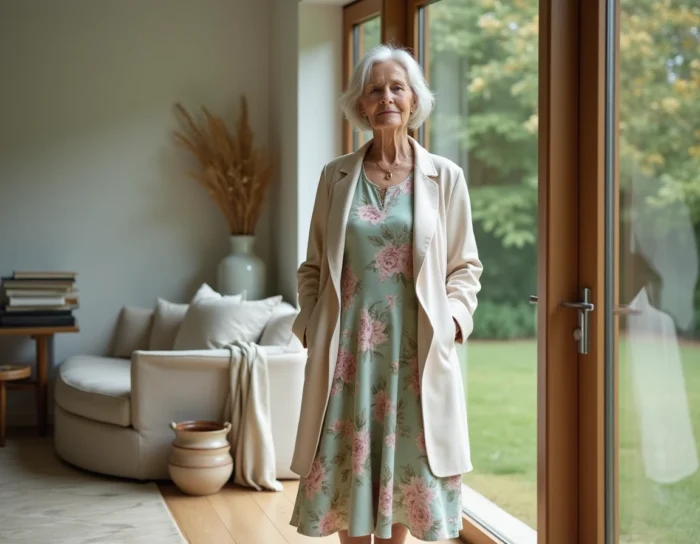
The complexion evolves with age. Off-whites, powder pinks, and lavender blues often illuminate better than pure white or solid black. The color worn near the face directly influences a healthy appearance.
Prints remain possible as long as they stick to medium-sized patterns. Very small patterns can give an outdated look, and very large patterns can disrupt the silhouette.
Accessories: Focus on Quality Rather Than Quantity
A well-chosen piece of jewelry (a brooch, a pearl necklace, a classic watch) structures an outfit better than three combined accessories. Silk or fine wool scarves serve a dual purpose: they protect the neck and add a touch of personality.
The choice of shoes remains the most strategic point. A small block heel of a few centimeters offers stability and style without compromising balance. Soft-soled ballet flats and leather loafers are elegant alternatives for everyday wear.
Online Shopping Experience: An Underestimated Barrier for Seniors
Finding suitable clothing in stores remains complicated. Dedicated sections for seniors are rare in general retailers, and specialized boutiques often focus on medical needs at the expense of style.
Online shopping poses other problems. The Tilting the Lens study (ASOS, 2024-2025) indicates that retail websites often provide too little information about size, types of closures, materials, or specific uses. These gaps complicate choices and increase returns.
- Check for the presence of a detailed size guide with actual measurements (bust, hip, inseam)
- Look for photos worn by models of varied body types, not just standard silhouettes
- Read descriptions of closures (zippers, snap buttons, magnets) before ordering
- Prefer sites that specify the exact fabric composition and return conditions
A site that details its closures and materials significantly reduces the risk of disappointment. This criterion distinguishes online shops genuinely designed for seniors from general platforms that add a “plus size” filter without adapting their product listings.

Style after 75 is built on precise choices of materials, cuts, and shopping channels. Adaptive clothing, long confined to a medical aesthetic, is gradually joining the everyday wardrobe. A real point of friction remains: the quality of product information, both online and in-store, which determines the ability to make the right choices without external help.