Between color palettes, material choices, and the overall scenography of a reception venue, wedding decoration involves decisions that go far beyond a simple flower-adorned table. What concrete differences separate current major decorative trends, and on what criteria should one decide for an elegant and coherent result?
Natural materials and wedding decoration: how the landscape has changed
Competitors willingly list decorative objects by category. A more useful angle is to observe how the base materials determine the overall ambiance, even before choosing a centerpiece or an arch.
According to ShotnBox (September 2026), raw materials dominate recent weddings: linen, rattan, cotton gauze, and solid wood. This shift towards organic materials is not a passing trend. It responds to a logic of sustainability and visual coherence that couples are actively seeking.
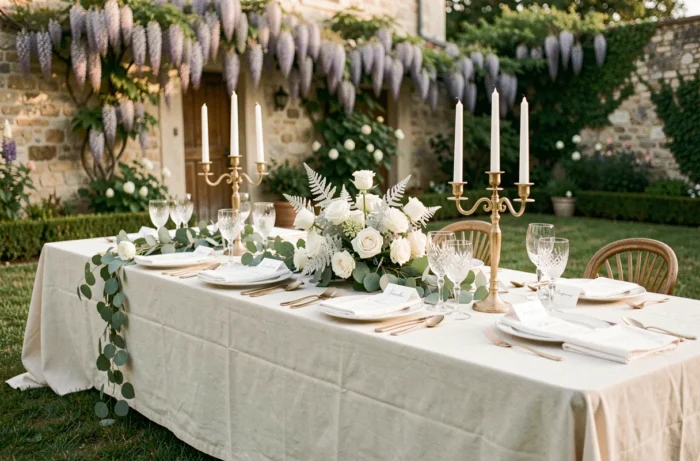
Specifically, choosing an ecru linen tablecloth instead of a satin polyester one alters the entire decorative chain: tableware, flowers, lighting. Starting from the material (and not from a Pinterest theme) avoids the “stylistic cacophony” that professional decorators point out. For discovering the decoration section of Mon Plus Beau Mariage, this material-focused approach is a good starting point before selecting specific elements.
Trendy wedding colors: comparison of current palettes
Color palettes structure the perception of a wedding more than any other decorative choice. The table below compares the dominant orientations identified in recent sources.
| Palette | Key Colors | Associated Materials | Ambiance | Ideal Season |
|---|---|---|---|---|
| Pure Organic | Beige, ecru, sage green | Linen, raw wood, cotton gauze | Calm, bright | Spring-Summer |
| Soft Terracotta | Terracotta, cream, light brown | Ceramics, rattan, plant leather | Warm, intimate | Autumn |
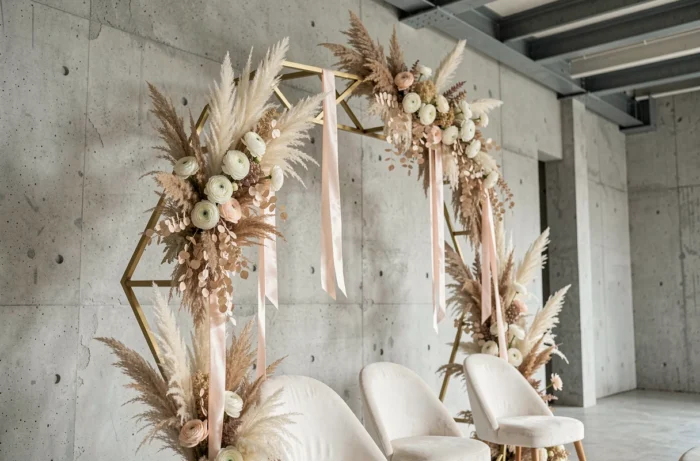
| Contemporary Minimalist | Off-white, pearl gray, matte black | Glass, brushed metal, polished concrete | Graphic, sober | All season |
| Revisited Rustic | Olive green, powder pink, ivory | Wicker, jute, dried flowers | Refined rustic | Summer |
The pure organic palette concentrates the majority of recent inspirations. The tones of beige, ecru, and sage green appear in almost all consulted sources (ShotnBox, Exposay). In contrast, the contemporary minimalist palette remains more present in urban weddings, with venues like lofts or galleries.
The choice of palette directly influences the floral budget. A terracotta palette tolerates more foliage and grasses (less expensive) than a minimalist palette that relies on graphic long-stemmed flowers.
Immersive scenography: beyond table decoration
The most noticeable shift in wedding decoration trends concerns the overall scenography. Immersive decor is gradually replacing the accumulation of objects on tables.
Three elements structure this evolution:
- Asymmetrical arches, which abandon the classic round shape for organic structures made of driftwood or oxidized metal, creating a focal point for the ceremony and photos
- Suspended installations (drapes, greenery garlands, cluster lighting) that dress the ceiling and transform a mundane room into an enveloping space
- Zone decor, where each area (welcome, cocktail, dinner, dance floor) has its own visual identity while remaining within the common palette
This zone-based approach requires prior reflection that a simple list of decorative purchases does not cover. It involves visiting the empty venue, measuring volumes, and considering guest circulation before choosing any decorative element.
Sustainable decoration and seasonal flowers: a concrete trade-off
Sustainability in wedding decoration is not limited to a principle discourse. It translates into choices that affect visual rendering and budget.
Seasonal flowers are cheaper and last longer than an arrangement of imported peonies in December. Wedding-specialized florists are increasingly steering towards compositions that mix local fresh flowers and dried foliage, reducing waste while adding texture.
The rental of decorative elements (arches, vases, candelabras, vintage furniture) is also on the rise. This option allows access to higher quality pieces without the investment of a purchase and avoids the storage problem after the big day.
- Local seasonal flowers: reduced cost, better durability, naturally harmonious palette
- Rental of furniture and accessories: access to vintage or designer furniture without purchase, return logistics managed by the provider
- Reuse of installations: a ceremony arch can become the backdrop for the photobooth, then the frame for the dessert corner
Reusing the same installation in multiple spaces reduces the number of necessary pieces while reinforcing the visual coherence of the whole.
Rustic theme or minimalist style: the gaps to measure
The rustic theme remains the most requested in searches related to wedding decoration. The minimalist style is gaining ground, but the two approaches diverge on practical points that are rarely detailed.
A rustic wedding tolerates imperfection: mismatched tableware, wrinkled tablecloths, and slightly wild bouquets work and contribute to the charm. A minimalist wedding, on the other hand, does not forgive any misaligned detail. Every visible element must be chosen with precision, which requires more time in advance and leaves less room for DIY.
The number of decorative pieces follows the same logic. The rustic style accumulates (candles, small vases, kraft place cards, garlands), while the minimalist subtracts. Fewer visible elements do not mean less work: every remaining object must be impeccable.
The choice between these two directions depends as much on the venue as on the temperament of the couple. A stone barn naturally calls for rustic decor. A contemporary space with large bay windows lends itself more to a clean approach, where natural light does most of the decorative work.