French elegance refers less to a specific wardrobe than to a way of assembling understated pieces with attention to materials, cuts, and overall coherence. This style is based on a principle of subtraction: removing the superfluous to keep only what structures the silhouette.
Materials and Finishes: What Distinguishes an Elegant Piece from a Mundane One
The first reflex to acquire is not about color or cut, but about touch. A shirt made of dense cotton poplin falls differently than a fine synthetic fabric, even with the same cut. The material determines the drape, and the drape creates the look.
Linen, merino wool, thick cotton, full-grain leather, and cork are materials that age well and gain character over time. In contrast, low-quality polyester pills after a few washes and loses all shape.
Observing the finishes allows for a quick filter of a piece: regular seams, buttons sewn with a foot (a small space between the button and the fabric), partial lining on a jacket. These details, invisible from a distance, alter the overall perception of the worn garment. The French style relies on resources like alafrancaisetoujourschic.fr that precisely document these dress codes and their application in daily life.
Restricted Wardrobe and Everyday Style: The Logic of the Capsule Wardrobe
The principle of a capsule wardrobe is to keep only a limited number of pieces, all of which can be combined with each other. The goal is not to own little out of asceticism, but to eliminate clothes that do not match anything else in the closet.
Concretely, this involves a base of neutral colors (navy, off-white, beige, gray, black) onto which one or two personal shades are added. This reduced palette avoids haphazard combinations and simplifies the choice each morning.
The Pieces that Structure a French Wardrobe
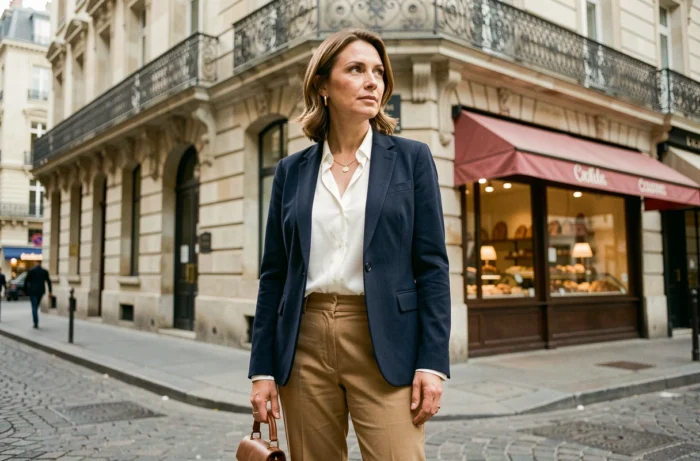
- A straight blazer in wool or textured cotton, worn equally well over raw jeans or pleated trousers. The structured jacket transforms an ordinary outfit into a constructed silhouette.
- A straight or slightly tapered jean, either raw or subtly faded, which serves as a pivot between casual and dressed-up styles.
- A pair of leather shoes (derbies, loafers, or ankle boots) that replace sneakers as soon as the outfit gains intention. The choice of shoe anchors the register of the entire silhouette.
- A simple bag, made of leather or a natural material like cork, whose size adapts to real uses (documents, laptop, groceries).
With these four pivots, most everyday situations are covered without accumulation.
The Aesthetic of Chic Everyday Life: When TikTok Redefines the Codes
Since 2024, an aesthetic termed “kinda chic” has emerged on TikTok and Instagram. The principle: filming ordinary gestures (preparing a meal, putting on a coat, walking in the rain) with careful framing and natural light, turning them into scenes of discreet refinement.
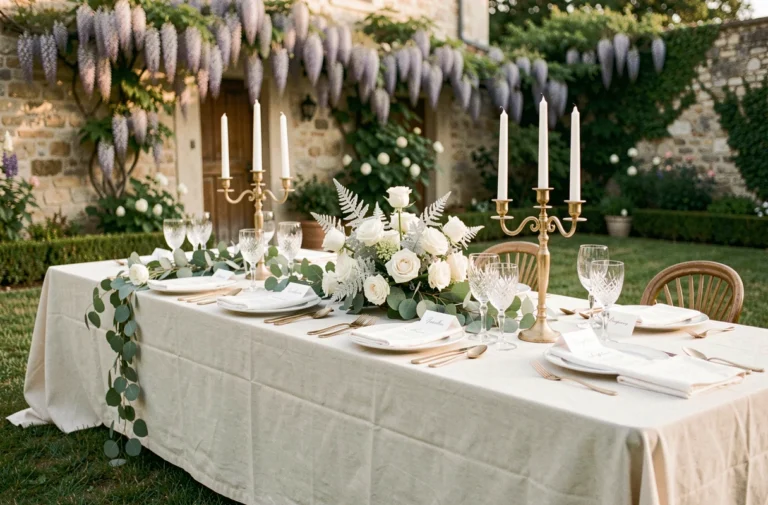
French elegance now extends to everyday gestures, not just clothing. The way to set a table, fold a scarf over a bag, or choose understated dinnerware contributes to this holistic approach.
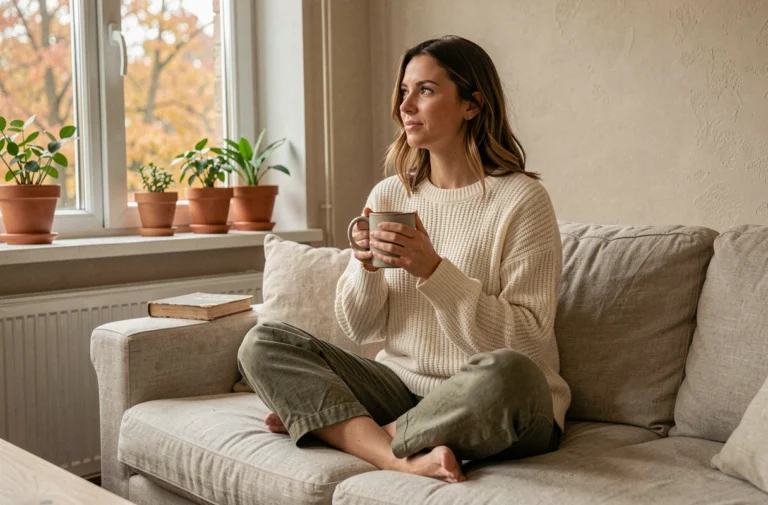
This movement has also given rise to “solitude influencers”: content creators who stage solo dinners, solitary walks, or intimate evenings as a desirable way of life. Elegance is reinterpreted as an art of being present with oneself, detached from the social or couple-centered codes.
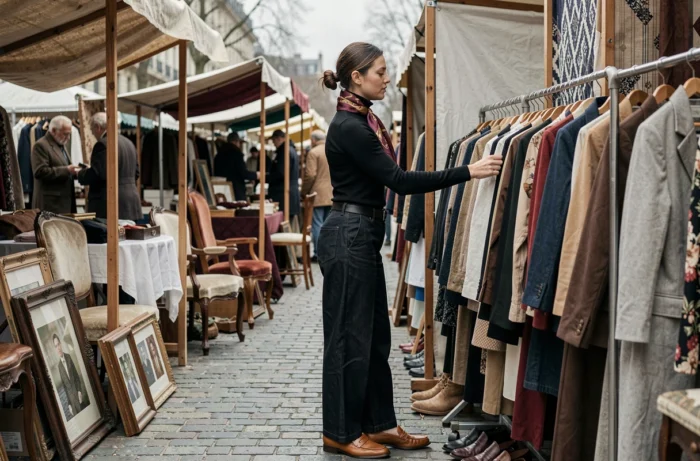
Adopting an Elegant Style Without Falling into Costume
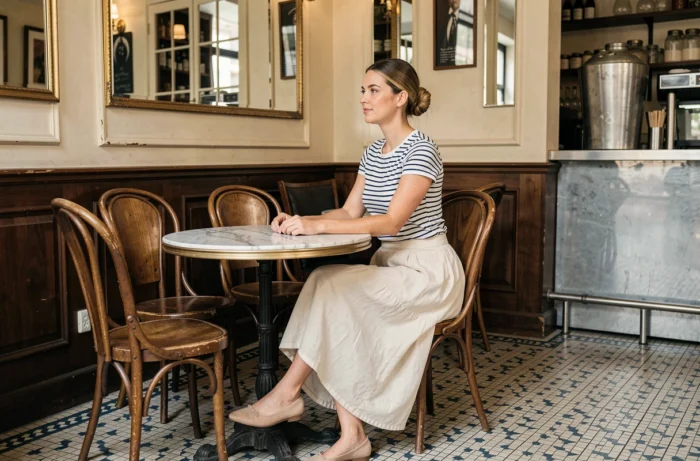
The line between a constructed outfit and a disguise lies in one detail: the degree of coherence with the person wearing it. A marinière bought “because it’s French” on someone who never wears stripes creates a visible mismatch.
Three principles help avoid this pitfall:
- Wear one strong piece at a time. A printed scarf with a structured blazer and flashy jewelry creates overload. Removing one element often suffices to rebalance the whole.
- Respect your natural proportions. High-waisted pants suit long silhouettes, while mid-rise cuts flatter a short torso. No style rule replaces trying on in front of a full-length mirror.
- Keep one casual element. French style works on a controlled contrast: a blazer with white sneakers, a dressy dress with a wicker basket. This asymmetry of registers creates an impression of naturalness.
The Role of Maintenance in the Longevity of Style
A quality garment that is poorly maintained loses its advantage in a few months. Ironing, brushing wool, polishing shoes, and storing on appropriate hangers extend the lifespan of pieces and preserve their original drape.
Everyday elegance is as much a maintenance discipline as it is a clothing choice. A pilled cashmere sweater or shoes with worn heels negate the effect of a flawless cut.
French style is not just a checklist of pieces to tick off. It is built through thoughtful material choices, a streamlined wardrobe where each piece has a clear function, and regular attention to maintenance. The rest, posture, gestures, and relationship to everyday objects, naturally flows from a wardrobe in which one feels at home.