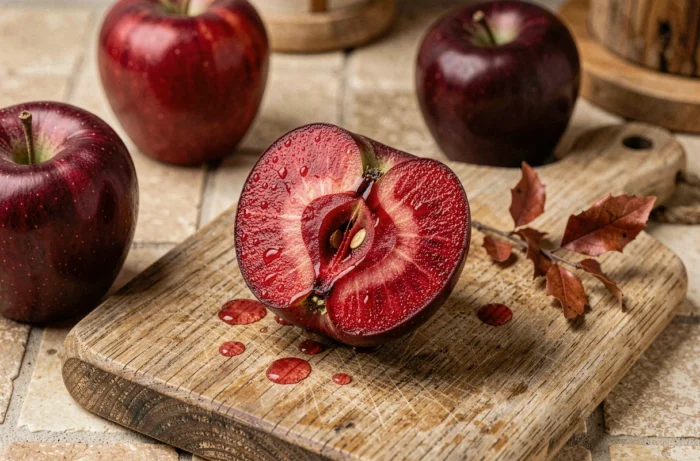
Red-fleshed apples, sometimes called blood apples, remain relatively unknown in French markets. Bred by crossing wild varieties from Central Asia with European cultivars, they stand out for their flesh, which ranges in color from bright pink to deep red.
This color comes from anthocyanins, pigments naturally present in the flesh, not just the fruit’s skin. Their cultivation is expanding in France, driven by interest from cider makers and home gardeners, although they remain less widely available than conventional varieties.
Anthocyanins and genetics: what really gives blood apples their color
The red color of the flesh is more than a cosmetic feature. It results from anthocyanins accumulating in the pulp’s cells, a process controlled by genetics. A study published in 2024 identified a variation in the promoter of the WRKY10 gene associated with the degree of red pigmentation in the flesh. This mechanism opens up new possibilities for breeding, but it does not establish a direct link between color intensity and flavor or nutritional qualities.
The environment also plays a role. Research has linked low temperatures to the activation of anthocyanin biosynthesis in apples. Two fruits of the same variety grown in different climates can show markedly different levels of redness. The intensity of the red color varies with the climate and stage of ripeness, so color alone is not enough to judge a fruit’s quality.
For those looking to explore the culinary uses of red-fleshed apples, also known as blood apples, there are plenty of ways to prepare them beyond simply eating them raw.
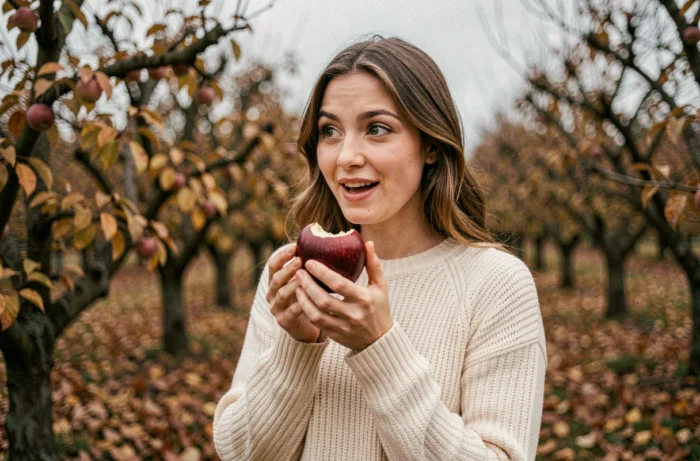
Cooking with red-fleshed apples: flavors ranging from tart to sweet
The flavor profile of blood apples is not simply that of a regular apple tinted red. Varieties bred from crosses with wild Asian apples often retain a more pronounced tartness than common eating apples. This tartness, sometimes accompanied by slightly astringent notes, mellows during cooking, giving way to fruity sweetness.
Texture varies from one variety to another. Some are crisp and juicy, with a firmness similar to Granny Smith apples. Others are softer and better suited to applesauce or jam. What they have in common is the color of their flesh, which is partly retained after cooking and gives dishes a natural pink hue without added coloring.
Recipe ideas with blood apples
Red-fleshed apples lend themselves to a variety of uses. Their color makes them as much a visual ingredient as a flavorful one.
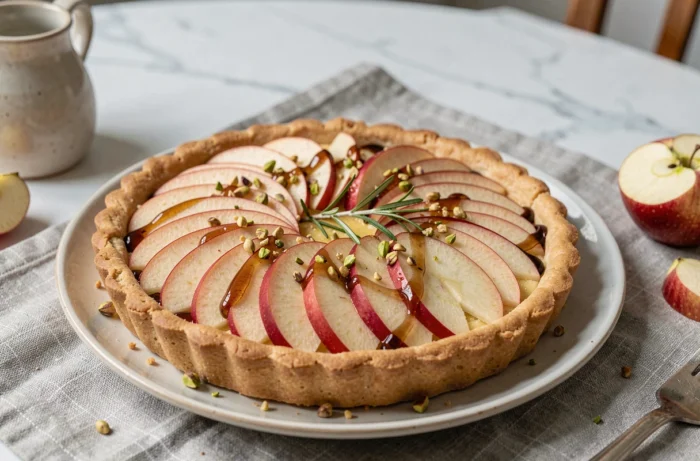
- In a thin tart, sliced raw and arranged on puff pastry: baking brings out pink hues and concentrates the tart flavors, creating a result reminiscent of a red berry tart
- In homemade applesauce, mixed with a sweeter variety such as Golden Delicious to balance the tartness: the resulting pink color is especially popular with children, with no need for food coloring
- In a salad, diced and combined with fresh goat cheese, walnuts, and a honey vinaigrette: the contrast between the fruit’s crisp tartness and the creamy cheese works well without any additional accompaniment
- In juice or a smoothie, blended with beetroot and ginger: the mixture’s intense red color conceals a more complex flavor than its appearance suggests
The red flesh retains some of its pigmentation after cooking, setting these apples apart from all other varieties in baking.
Red-fleshed apple varieties available in France
Not all blood apples are alike, and their availability in France varies. The best-documented varieties come from breeding programs in Europe, which aim to combine red pigmentation with flavors suited to Western tastes.
The original variety from Asia is too tart and unbalanced in flavor for the fresh-fruit market. Growers have therefore crossed this strain with local varieties to produce sweeter fruit. Blood apples sold commercially are hybrids, selected to reduce astringency while retaining their color.
These varieties are harvested relatively early, generally between late August and mid-September, depending on the region. This means red-fleshed apples appear at the start of the season, before most winter varieties. They do not keep as well as Fuji or Braeburn apples, which explains why they are absent from store shelves in the depths of winter.
A fruit also used to make rosé cider
Red-fleshed apples are not just for eating. Cider makers use them to produce rosé ciders whose color comes directly from the fruit, rather than from blending with red berries. This market has helped renew interest in these varieties in France’s cider-producing regions.
Nutritional limitations and gaps in the data on blood apples
Anthocyanins are antioxidants recognized in scientific literature. Their presence in the flesh, not just the skin, suggests that blood apples may provide more than conventional apples. However, specific data are lacking: no published comparative study has precisely quantified the nutritional advantage of a blood apple over a standard variety eaten with its skin.
It is tempting to draw conclusions, but caution is warranted. Anthocyanin content depends on the variety, stage of ripeness, growing conditions, and storage. Claiming that a red-fleshed apple is “better for your health” than another apple would mean overlooking these variables. The benefits of eating fruit regularly, on the other hand, are well documented, whatever the color of the flesh.
Blood apples deserve a place in an orchard or fruit basket for their flavor and visual appeal. Nutritionally, it is best to think of them as an interesting alternative rather than a superfood, until more precise data become available.