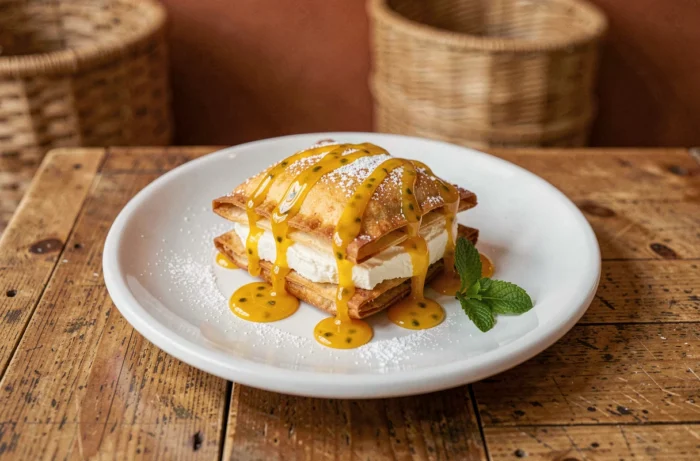
The letter X is the rarest in the French culinary alphabet. In recipe indexes and Francophone gastronomic dictionaries, the category “dessert in X” often remains empty. To find sweet preparations whose names start with this letter, one must look towards Chinese, Mesoamerican, and Iberian culinary traditions, where several lesser-known sweets deserve a place at the table.
Chinese desserts in X: plant-based and refreshing preparations
Chinese gastronomy provides the majority of authentic desserts beginning with X. These preparations share a common trait: they favor gelled textures, plant-based bases, and delicate flavors.
The xingren doufu is a jelly made from almond milk, often confused with tofu due to its appearance. Its quivering texture, similar to a very light panna cotta, makes it a popular summer dessert in several Chinese provinces. It is served cold, accompanied by a syrup flavored with fruits or goji berries.
The xi gua lao is based on a different principle: it is a watermelon jelly solidified with agar-agar, a plant-based gelatin extracted from algae. The result is a translucent dessert, very lightly sweetened, that retains the freshness of the fruit. This recipe well illustrates the current trend towards light and easily veganized desserts.
The xingren tang completes this trio. This sweet almond soup can be consumed hot or cold depending on the season. Its creamy base, obtained by finely grinding almonds in water, brings it closer to dessert drinks found in Cantonese dim sum.
These three desserts remain very little referenced in the Francophone culinary blogosphere, while they now appear in English selections dedicated to foods in X. To explore more desserts in X on L’Atelier Singulier, the list also includes Iberian and Mesoamerican specialties.
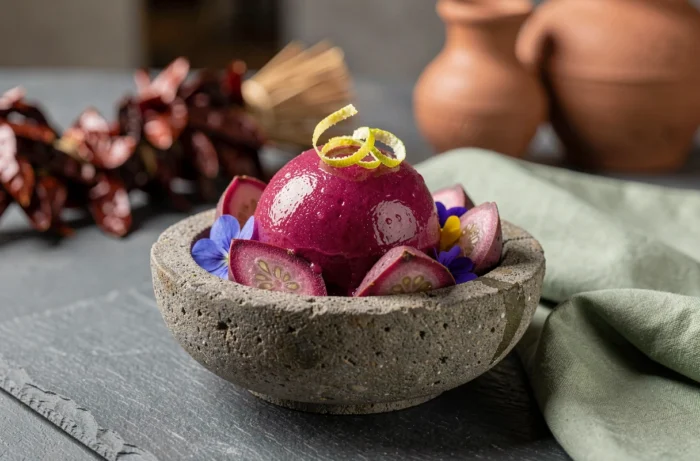
Xocolatl: the Aztec drink that gave rise to modern chocolate
Before becoming the bar we know, chocolate was a spiced drink called xocolatl. The Aztecs and Mayans prepared this beverage from ground cocoa beans, mixed with water, chili, vanilla, and sometimes corn. The result was bitter, frothy, and consumed during ritual ceremonies.
The xocolatl contained neither milk nor sugar. Its flavor profile was nothing like a dessert in the contemporary sense. It was only after the arrival of cocoa in Europe that sugar and milk transformed this drink into a sweet preparation.
Current reinterpretations of xocolatl
Chocolatiers and baristas are reinterpreting xocolatl in the form of spiced truffles, hot drinks with chili, or ganaches infused with vanilla and pepper. These creations are part of the bean-to-bar movement, which values the origin of cocoa and ancestral recipes.
Xocolatl works as a dessert provided it is reinterpreted with sweet ingredients. In drink form, served at the end of a meal with a hint of honey or cane sugar, it advantageously replaces a gourmet coffee.
Xerém and xouba: desserts or savory dishes turned sweet
Two Iberian preparations begin with X and hover around the boundary between savory and sweet.
The xerém is a Portuguese dish made from crushed corn, traditionally cooked in a savory version with seafood. Its sweet variant exists in some regions: the corn is then cooked in milk, flavored with cinnamon and lemon, and served warm like a dessert porridge. This version resembles milk semolina or Italian polenta dolce.
The xouba, on the other hand, is a small fish from the Galician coast. Its connection to desserts is indirect: in Spanish tradition, certain local festivals associate grilled xouba with regional sweets. The connection is anecdotal, but it appears in lists of “desserts in X” that seek to expand a category that is very short by nature.
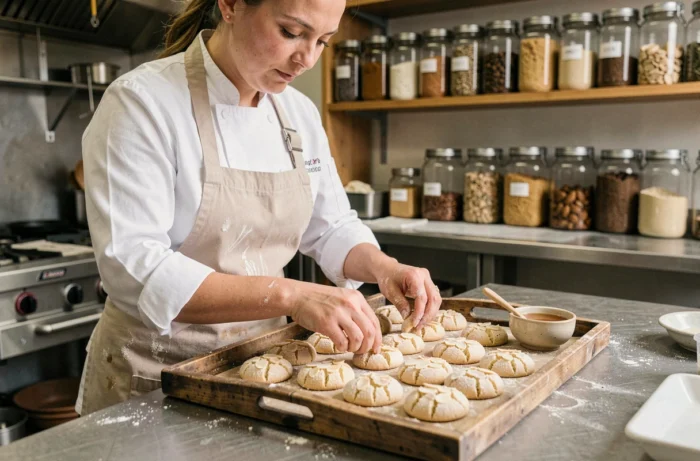
Simplified recipe: making homemade xingren doufu
Among the desserts in X presented here, the xingren doufu is the most accessible to reproduce in a French kitchen. Here are the necessary elements:
- Almond milk (homemade or store-bought, preferably unsweetened) as the liquid base
- Agar-agar powder, which replaces animal gelatin and allows for a firm set at room temperature
- A light syrup of choice: sugar and orange blossom water, red fruit coulis, or goji syrup
- Fresh fruits for garnish: mango, lychee, or raspberries depending on the season
The principle is simple: heat the almond milk with the agar-agar, pour into a flat mold, let set in the refrigerator, then cut into cubes. The xingren doufu can be prepared in less than twenty minutes, excluding setting time.
The result is a dessert without butter, cream, or eggs, making it compatible with most dietary restrictions. Its delicate texture and subtle almond flavor make it an ideal base for various toppings: chocolate coulis, pistachio bits, or lemon zest.
What pairings to serve a dessert in X
The rarity of these desserts makes them original choices for a themed meal or a dinner among culinary curiosity enthusiasts. Here are some suggestions to highlight them:
- The xingren doufu pairs well with a Japanese green tea or a light muscat served chilled
- The xocolatl reimagined as a dessert drink accompanies spiced dry cookies or a citrus tart
- The sweet xerém pairs with a sweet Portuguese wine like moscatel
These pairings are based on a principle of complementarity: desserts in X, often discreet in sweetness and rich in aromas (almond, cocoa, cinnamon), benefit from being accompanied by drinks that extend their notes without overpowering them.
The letter X remains a limited playground for fans of culinary trivia, but the few desserts that exist open a window into gastronomic traditions rarely encountered in French patisseries. The xingren doufu or the xocolatl are worth the detour, if only to step away from the beaten paths of melting chocolate and apple pie.