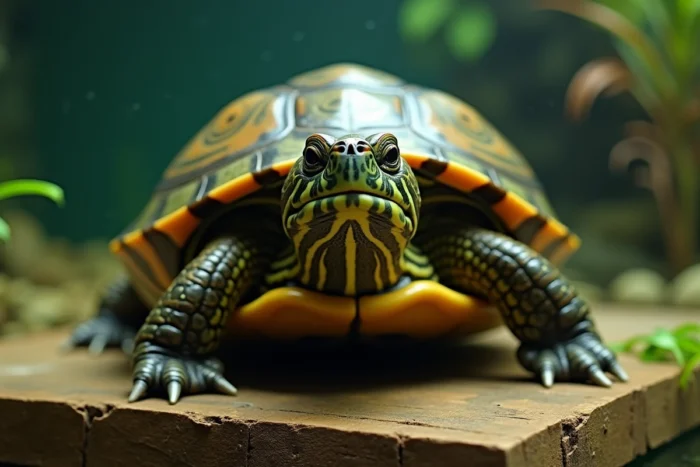
A turtle that bites, charges, or chases a fellow turtle does not express a character trait. It reacts to a specific stimulus, often related to its environment, health, or a mistake in the group composition. Identifying this stimulus is the only way to correct the behavior without further stressing the animal.
Sexing and species identification: the mistakes that create aggression
The majority of cases of aggression in turtles stem from a misunderstanding from the start. Two males coexist in a restricted space because the sexing was done incorrectly, or two species with incompatible biological rhythms share the same enclosure.
Reliable sexing of a terrestrial turtle is only possible from a certain size, which varies by species. Before this threshold, confusing a male with a female is common, even among experienced breeders. The shape of the plastron (concave in males, flat in females) and the length of the tail are the most commonly used criteria, but they remain ambiguous for juveniles.
When two males reach sexual maturity in the same terrarium, dominance behaviors explode: bites to the limbs, shell clashes, incessant chases. This is not pathological aggression; it is a programmed territorial conflict. To understand the behavior of an aggressive turtle, one must first check the sex composition of the group.
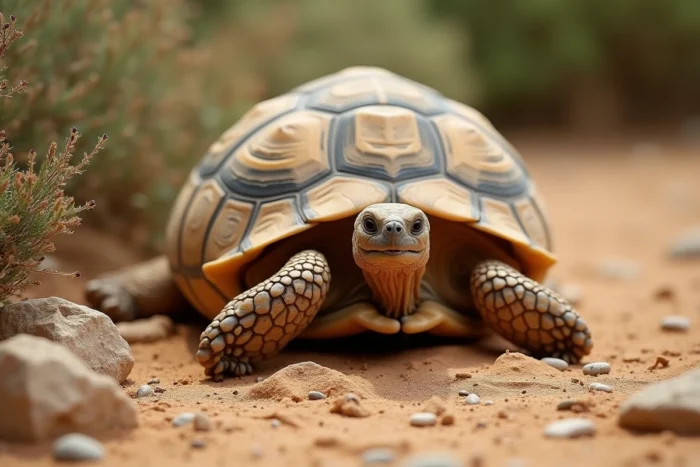
Co-habitation between different species poses a similar problem. Mixing a Hermann’s tortoise and a steppe tortoise, for example, brings together two animals whose communication signals, temperature needs, and hibernation cycles diverge. Conflicts arise from this interspecific misunderstanding, not from a lack of socialization.
Pain and illness: when aggression signals a health problem
A sudden change in behavior, especially in a normally calm turtle, should prompt an investigation into a medical cause before making any modifications to the terrarium. Reptiles do not express pain like mammals. They do not vocalize, and they do not always visibly limp.
The most documented triggers are:
- Skin mycoses and irritations, which cause constant discomfort and make the turtle reactive to touch
- Respiratory issues (wheezing, panting, sneezing), often related to too low a temperature or inappropriate humidity
- Abscesses on the limbs, neck, or tail, common in terrestrial turtles and sometimes invisible under the scales
- Egg retention in females, which generates intense abdominal pain and agitated behavior
A suffering animal bites more easily, not out of aggression but as a defensive reflex. Before rearranging the enclosure or separating individuals, a consultation with a specialized veterinary professional can rule out these causes.
Enclosure structure: surface area is not enough
Enlarging the terrarium is the first instinct when a turtle becomes aggressive. This instinct is not wrong, but it remains incomplete. The internal structure of the space is as important as its total surface area.
A large enclosure without visual obstacles leaves turtles in constant visual contact. For a dominant male, this means constant territorial stimulation. Micro-zones (hiding spots, rocks, dense plants) break lines of sight and reduce confrontations.
Each turtle needs at least one retreat point where it can escape the gaze of others. Hiding spots should be spread out in distinct areas, not clustered in one corner. Water points and feeding areas should also be duplicated to avoid competition.
UVB lamp and thermal gradient
A poorly positioned UVB lamp creates a single hot spot towards which all turtles converge. This concentration forces interactions that the animals would not have chosen. Installing two heat sources or expanding the exposure area mechanically reduces friction.
The thermal gradient (hot zone, temperate zone, cool zone) must allow each individual to thermoregulate without crossing a fellow turtle’s territory. A terrarium without a correct thermal gradient generates chronic stress, which manifests as irritability.
Concrete solutions based on the type of aggression in turtles
The response depends on the diagnosis. Generic solutions (“give it more space”) work poorly because they do not target the cause.
Male aggression
Separation remains the most reliable solution. Two adult males in the same enclosure will eventually injure each other, regardless of the size of the space. A ratio of one male to three to four females is often recommended for social species, but total separation is preferable when injuries have already begun.
Aggression related to interspecies cohabitation
The only sustainable solution is to separate the species. Adapting the terrarium parameters for two species with different needs (temperature, humidity, hibernation cycle) is technically very difficult and rarely satisfactory for either animal.
Sudden aggression in an isolated individual
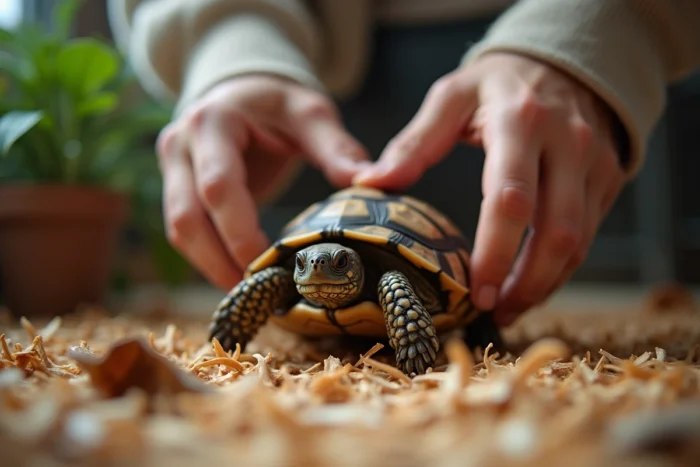
When a solitary turtle becomes aggressive towards humans, the medical avenue takes precedence. If the veterinary examination reveals nothing, check the temperature of the terrarium, the proper functioning of the UVB lamp, and the quality of the diet. A deficiency in UVB alters calcium metabolism and can cause diffuse bone discomfort.
Aggression in turtles is never random. It responds to a logic of survival, territory, or pain. Correct sexing, a structured enclosure with micro-zones, and regular veterinary follow-up eliminate the vast majority of conflict situations.