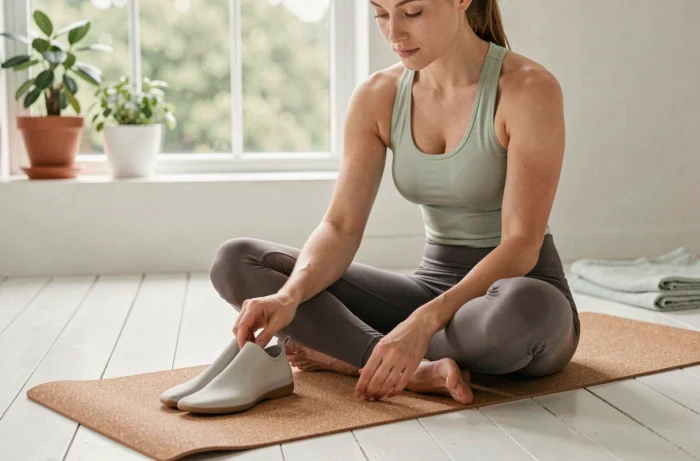
The majority of yoga practitioners work barefoot, and this is the most relevant setup on a mat. The question of yoga shoes only arises in specific contexts: cold studio floors, hybrid yoga-pilates practices, transitions between outdoors and indoors, or foot pathologies requiring minimal support. Here, we distinguish the technical criteria that separate an appropriate shoe from an unnecessary accessory.
Minimalist sole and proprioception: the criterion that general guides overlook
A high-performing yoga shoe is closer to being barefoot, not like a running shoe. The central parameter is the zero or nearly zero drop, meaning the absence of elevation between the heel and the forefoot. This zero drop preserves the natural alignment of the ankle in balance postures (Vrksasana, Utthita Hasta Padangusthasana) where any elevation of the heel shifts the center of gravity.
Cushioning, a key criterion in running, becomes counterproductive here. A thick cushion cuts off the sensory feedback from the ground and reduces the ability to adjust weight distribution between the metatarsals and the heel. We recommend the thinnest sole possible, sufficient to protect the sole without isolating the foot from the ground.
The barefoot concept applied to studio shoes meets this specification exactly. Several manufacturers are now structuring their training range around yoga, pilates, and low-impact activities versatility, with models featuring soft and flexible soles rather than cushioned ones. This cross-usage logic dominates the current market.
Before you decide, it may be helpful to understand which yoga shoe to choose based on your practice style and the frequency of your sessions.
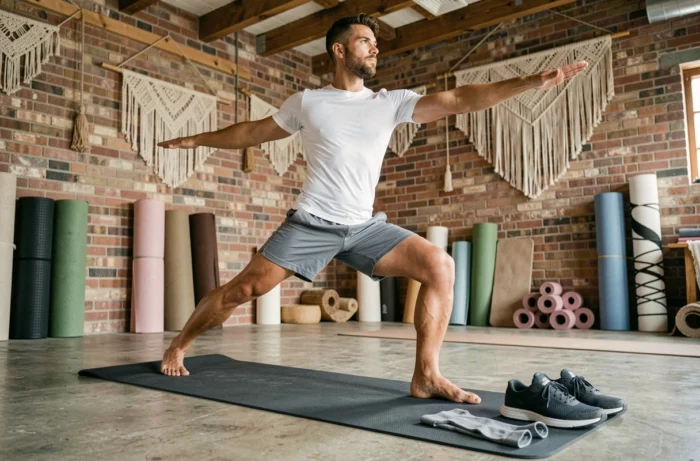
Sole grip: more decisive than cushioning for yoga
Grip on the ground is the second technical criterion to evaluate, and it surpasses cushioning in importance for any stability-oriented practice. On a studio floor or vinyl surface, a smooth sole turns every standing pose into an involuntary balance exercise.
Natural rubber or textured gum soles provide superior grip compared to smooth synthetic soles. The sole pattern also matters: micro-reliefs or targeted grip areas under the metatarsals and heel improve stability in dynamic transitions (Vinyasa, Ashtanga).
- Textured natural rubber: maximum grip on hardwood and smooth surfaces, flexibility retained at low temperatures
- TPR (thermoplastic rubber): good compromise between grip and durability, common in versatile yoga-pilates models
- Smooth synthetic sole: to be avoided, designed for running or walking, slippery on studio floors
A common alternative is the non-slip sock with silicone dots. It retains the proprioception of being barefoot while adding grip. For practitioners who hesitate between shoes and going barefoot, it is often the most coherent solution on the mat.
Width of the shoe and toe mobility in posture
A rarely discussed point in general guides: the width of the toe box. In yoga, the active spreading of the toes directly contributes to stability in standing poses. A shoe with a narrow fit compresses the metatarsals and prevents this natural anchoring.
We observe that models from the barefoot movement consistently offer a wide and anatomical toe box, allowing the toes to spread as they would when barefoot. This is a non-negotiable selection criterion for regular practice.
The upper should remain low, flexible, without rigid reinforcement around the ankle. Any structure that limits dorsiflexion or foot eversion compromises floor postures (Virasana, Vajrasana) and transitions with bent knees.
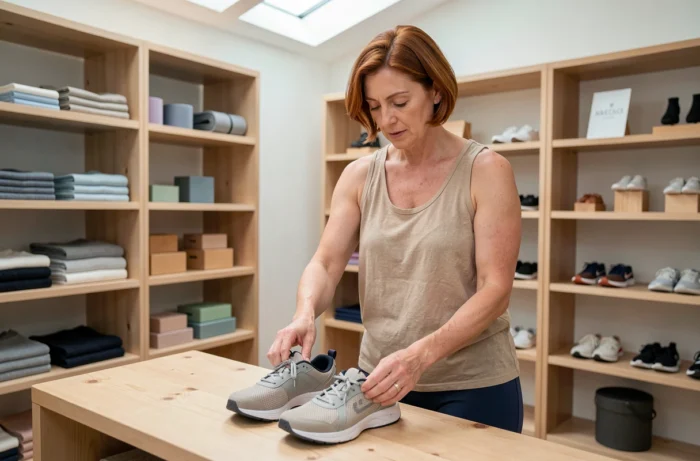
Breathable materials and maintenance
Technical mesh or engineered knit remain the most suitable materials for the upper. They wick moisture during dynamic sessions and dry quickly after washing. Natural materials like organic cotton or cork offer pleasant tactile comfort but dry more slowly.
A machine-washable model simplifies maintenance, especially for practitioners who attend multiple sessions per week. Check this point before purchase: some glued soles do not withstand repeated washing cycles.
Yoga and pilates shoes: should there be a distinct model?
The convergence of yoga-pilates ranges among major brands reflects a biomechanical reality: the constraints are similar. Both disciplines require foot flexibility, grip, and proprioception. The difference lies in one point: the Reformer pilates sometimes requires a slightly more structured sole for exercises on the carriage, whereas yoga on the floor prioritizes total flexibility.
For mixed practice, a single model with a thin sole and multidirectional grip covers both uses without major compromise. Investing in two distinct pairs is only justified if you practice each discipline several times a week at high intensity.
- Vinyasa or Ashtanga Yoga: prioritize flexibility and front-back directional grip
- Mat Pilates: thin sole, omnidirectional grip, minimal lateral support
- Reformer Pilates: slightly stiffer sole for pushing on the carriage, reinforced grip
- Restorative or Yin Yoga: non-slip sock sufficient, the shoe adds nothing more
The choice of a yoga shoe is based on three verifiable parameters in-store: zero drop, width of the toe box, and type of rubber in the sole. Everything else falls under subjective comfort. Test each model by reproducing a balance pose (Tree or Warrior III) before finalizing your purchase. If you can feel the ground under your feet and your toes can spread freely, the model fulfills its role.