
Piveteau pellets are among the most mentioned brands on forums and groups dedicated to pellet heating in France. Manufactured in Vendée from softwoods, they hold the DINplus certification and have a high-end image that the brand has cultivated for several years. User feedback on this reference is abundant, but reading it requires a critical filter: between genuine satisfaction and mere brand recognition, opinions diverge on very concrete points.
Soiling and cleanliness of the hearth: the real field test of Piveteau pellets
The technical sheet of a pellet (ash content, calorific value, moisture content) provides a framework. It says nothing about what actually happens in your stove after a week of operation. On specialized forums, Piveteau pellet users consistently refer to two practical indicators: the condition of the glass and the amount of ash in the burn pot.
A hearth that remains clean after several days of use without intermediate cleaning is a sign of efficient combustion and a low fine particle content. Several feedbacks on the Facebook group “Poêle à Pellet astuces, conseils et dépannages” mention that Piveteau leaves little residue compared to entry-level brands. The glass remains relatively clear, which indicates a good effective calorific value.
On the other hand, other users report that the cleanliness of the hearth depends as much on the stove’s settings and maintenance as on the pellet itself. A poorly calibrated draft or a soiled burn pot will skew any test. This is why the most reliable feedback on Piveteau pellets reviews and feedback comes from users who specify their stove model, their sweeping frequency, and their storage conditions.
Stability of Piveteau batches: a criterion not covered by the technical sheet
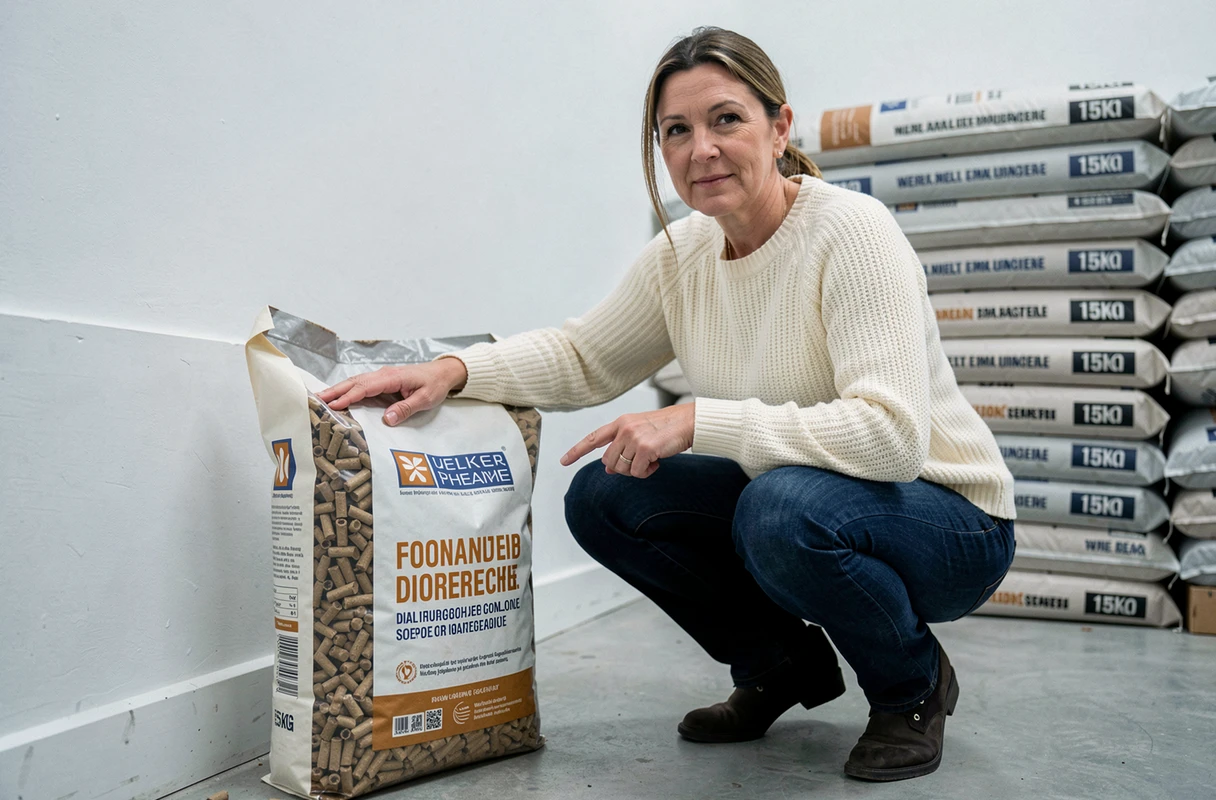
A recurring complaint about pellets, regardless of the brand, concerns the variation in quality from one batch to another. A bag purchased in October may provide exemplary combustion, while a bag of the same brand delivered in February may generate more dust or clinkers.
Piveteau, as an integrated manufacturer that controls its production chain in Vendée, theoretically has an advantage in this regard. The raw material (softwood) and the drying process are consistent. Long-time users on forumconstruire.com generally confirm this regularity: several mention having used “more than one pallet” without noticing any significant difference between deliveries.
This stability remains difficult to guarantee absolutely. Storage conditions at the retailer or during transport can alter the moisture content. A bag exposed to moisture will lose its calorific value, regardless of the care taken in manufacturing. Storing the bags in a dry and ventilated place remains the first precaution to take before judging the quality of a pellet.
Testing a few bags before a pallet: the method that separates reliable feedback from brand reflex
One point frequently mentioned in feedback dedicated to Piveteau is to buy a few bags before ordering a full pallet. This advice, seemingly simple, is the only truly reliable method to evaluate a pellet on your own installation.
The reason is technical. Each stove has its own combustion characteristics: air flow, nominal power, flue diameter. A pellet that works perfectly in a natural convection stove may yield mediocre results in a ducted stove set to minimal power. Online reviews, no matter how detailed, cannot predict how a pellet will behave in your specific setup.
Here are the indicators to observe during a test on a few bags:
- The condition of the glass after two to three days of continuous operation, without intermediate cleaning: a light haze is normal, an opaque deposit indicates a combustion issue or incompatibility with the stove.
- The quantity and texture of the ash in the burn pot: fine gray ash indicates good combustion, while clumped clinker blocks reveal an excess of fines or too high an ash content.
- The noise level and regularity of the flame: irregularly sized or overly brittle pellets cause jolts in the auger, generating noise and an unstable flame.
Piveteau versus Crépito and Woodstock: what user comparisons reveal
On Facebook groups and dedicated forums, the question “Piveteau or Crépito?” frequently arises. Both brands occupy the premium segment and display similar technical characteristics: DINplus certification, French manufacturing, moisture content below the standard threshold.
Field feedback diverges on this point. Some users prefer Piveteau for the consistency from one batch to another, while others find Crépito slightly superior in terms of hearth cleanliness. These marginal differences often depend more on the stove used than on the pellet itself.
Woodstock, another frequently mentioned competitor, positions itself in a similar niche. The most honest comparison between these brands does not focus on the technical sheets (which are nearly identical in the DINplus segment) but on the distribution network and the price per delivered pallet. A pellet of equivalent quality sold cheaper upon delivery can represent significant savings over a full heating season.
Piveteau sub-brands: Zénith, Flamino, and the packaging question
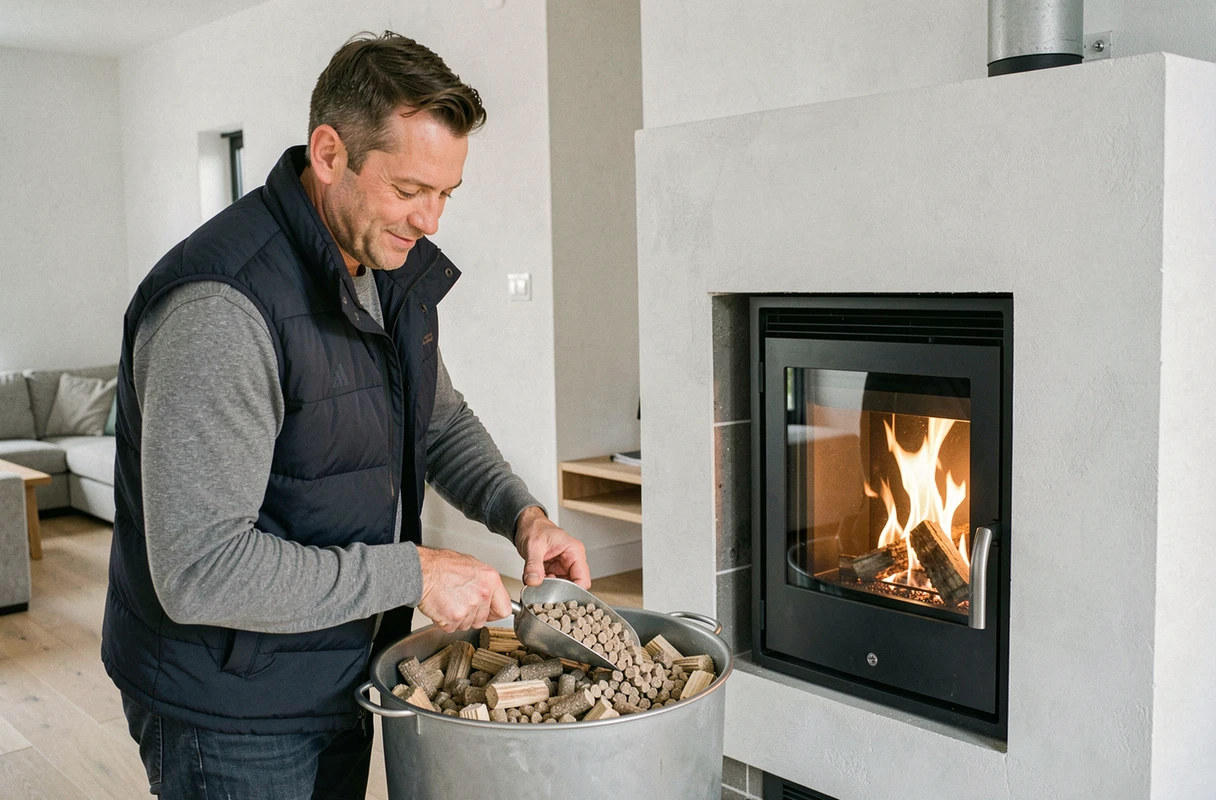
An element not prominently visible in product sheets but well documented on forums: Piveteau also produces pellets sold under other names, notably Zénith and Flamino. Several users on forumconstruire.com, including some working in large DIY stores, confirm that Zénith is the same product as Piveteau with different packaging.
This information has a direct implication on the purchasing choice. If the pellet is identical, the price difference between the Piveteau brand and its sub-brand becomes the only decision criterion. Feedback from those who have used multiple pallets of Zénith reports no performance difference compared to the branded Piveteau.
The wood pellet market in France largely relies on brand trust. DINplus certified pellets share a common technical foundation, and actual performance differences are measured in the burn pot, not on the label. Observing your glass, weighing your ash, and testing before buying in bulk remain the only actions that transform a subjective opinion into a reliable assessment.