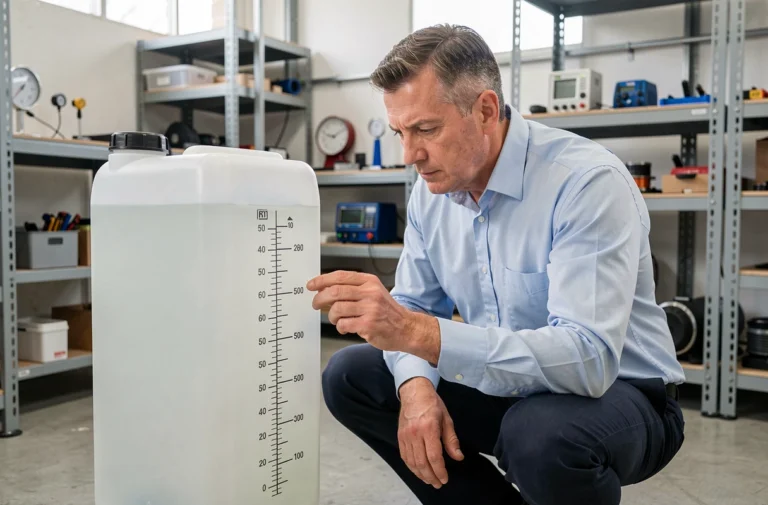
A pool shows a correct pH, a normal chlorine level, and yet the water remains cloudy or turns green within a few days. This frustrating scenario is affecting more and more residential pools, and the cause is rarely where one might first look. Understanding what is actually saturating the water allows for the selection of the right corrective measure, rather than piling on treatments without results.
Redox potential and cyanuric acid: two underestimated indicators of saturated water
Most pool owners monitor pH and free chlorine. These two parameters are not enough to guarantee water clarity. The redox potential, measured in millivolts, reflects the actual ability of the water to oxidize organic matter and destroy microorganisms.
When this potential drops below about 650 mV, the water loses its disinfecting power even if chlorine seems to be present in sufficient quantity. This discrepancy is often explained by an excess of cyanuric acid (the stabilizer), which “locks” the chlorine and prevents it from acting.
Cyanuric acid protects chlorine from solar UVs, which is useful up to a certain threshold. Beyond that, it gradually neutralizes the disinfecting action. The water becomes a favorable environment for algae and deposits, without the standard test strips indicating any glaring anomalies. To explore solutions for saturated pool water, it is essential to first measure this stabilizer level accurately.
| Indicator | Ideal Range | Consequence of Excess |
|---|---|---|
| pH | 7.2 – 7.4 | Irritations, calcium deposits, less active chlorine |
| Free Chlorine | 1 – 1.5 mg/L | Odor, eye irritation |
| Stabilizer (cyanuric acid) | 30 – 50 mg/L | Chlorine blockage, over-stabilization |
| Redox Potential | ≥ 650 mV | Ineffective disinfection despite “normal” chlorine |

Why pool water saturates faster than before
The increasing use of covers, roller shutters, and thermal blankets limits evaporation. This is an advantage for water consumption but a disadvantage for pool chemistry. Less evaporation means less natural renewal.
Water restrictions and rising rates also encourage reduced partial drainings. The less frequently water is renewed, the more salts, calcium, and stabilizer accumulate. This structural trend has affected the majority of family pools for several seasons.
Stabilized chlorine tablets, widely used for their convenience, contain cyanuric acid. With each addition, the stabilizer level rises, never decreasing on its own. Over an entire season without partial draining, the pool can reach stabilizer levels well beyond the recommended range.
Method for correcting over-stabilized pool water
The first step is to quantify the problem. 7-parameter test strips provide an indication, but a photometer (available at most pool supply stores) offers a more reliable measurement of the stabilizer.
Partial Drain and Dilution
Dilution remains the only proven method to lower the stabilizer. Cyanuric acid does not chemically degrade in water. No commercial product reliably destroys it in a functioning pool.
- Draining between one-third and half of the pool volume, then refilling with fresh water, mechanically reduces the concentration of stabilizer and dissolved salts.
- After refilling, wait for the filtration system to circulate the entire volume (at least one complete cycle) before conducting another analysis.
- Take advantage of this draining to clean the sand filter or replace the filter media if the pressure gauge remains high after backwashing.
Shock Treatment Post-Dilution
Once the stabilizer has dropped back into the acceptable range, a shock treatment with unstabilized chlorine (calcium hypochlorite or bleach) can restore disinfection without reintroducing cyanuric acid. Stabilized shock chlorine, on the other hand, would exacerbate the problem within a few weeks.
During the shock treatment, the filtration must run continuously until the water regains its clarity. This duration varies depending on the pool volume and the accumulated organic load.
Filtration and Regular Maintenance: What Prevents Relapse
A pool with insufficient filtration time accumulates suspended particles, even with correct chemistry. The classic rule (water temperature divided by two, in hours of filtration) serves as a starting point, but periods of high heat often require more.
- Check the pressure on the filter gauge weekly. A pressure that rises without dropping after backwashing indicates a clogged filter media.
- Clean the skimmer baskets and pump pre-filter at least twice a week during peak season.
- Alternate between stabilized chlorine tablets and unstabilized chlorine to slow the accumulation of cyanuric acid throughout the season.
- Schedule at least one partial drain per year, ideally at the beginning of the season, to renew a significant fraction of the volume.
The stabilizer level should be checked at least once a month during the swimming season. Beyond the recommended threshold, no adjustment of pH or chlorine will compensate for the ongoing chemical blockage.
The health regulations applicable to public pools set a strict ceiling for cyanuric acid, used as a benchmark by many professionals for private pools. This threshold serves as a warning signal: when approaching it, partial draining is no longer optional.
The clear water of a pool relies less on the quantity of added products than on the balance between renewal, filtration, and the choice of chlorine type. A pool that regularly receives fresh water and has a properly functioning filter rarely encounters saturation issues.