A well-maintained home is not one that is renovated every ten years. It is a home where critical points are continuously monitored. Protecting and maintaining your house on a daily basis relies on precise technical actions, often overlooked in general guides that limit themselves to surface cleaning.
Ventilation and humidity management: the most underestimated maintenance task
A single-flow ventilation system with uncleaned extraction vents loses a significant part of its airflow in less than two years. We recommend dusting the vents every quarter and checking the motor unit once a year.
Daily airing remains the most effective measure against mold. Ligeris, a social housing organization, emphasizes five minutes of airing per room each day to prevent condensation on cold walls. Laundry should dry in a ventilated room, never in a closed bedroom or living room, to avoid saturating the ambient air and accelerating the degradation of wall coverings.
Thermal bridges at wall corners are areas where condensation settles first. Running your hand over these corners during cold periods allows you to detect an abnormal temperature difference before black marks appear. If you discover everything about the house with Protect Habitation, you will see that these technical issues deserve as much attention as regular cleaning.
Flushing pipes after vacancy
The ARS Normandie recommends, after a prolonged absence, to flush cold and hot water pipes by letting the first liters run before any food or hygiene use. Water stagnation in pipes promotes the development of bacteria and the dissolution of metals present in old soldering or fittings.
This action applies after vacations, but also after a week of absence in a second home. We observe that most occupants turn on the tap and fill a pot directly. The microbiological risk is real, even on a recent network.
For homes equipped with a hot water tank, raising the temperature to its maximum once a month limits the risk of bacterial proliferation in the tank. Checking the safety valve of the tank is part of the same control cycle.
Decree No. 2026-596: new obligations on energy performance in leases
The decree No. 2026-596, applicable from October 1, 2026, mandates detailed information on the energy performance of the housing in new residential leases. This text strengthens the responsibility of occupants in the daily use of the property: airing, heating management, maintenance of ventilation equipment.
For tenants, this means that documented failures in regular maintenance (mold due to lack of ventilation, degradation of an unreplaced shower seal) can be more easily opposed during the exit inspection. The text does not create new direct sanctions, but it structures the evidence in case of disputes.
Landlord owners have an interest in providing a synthetic maintenance log to the tenant upon signing the lease. This document lists the expected actions and their frequency, which protects both parties.
Surface maintenance and cleaning products: balancing effectiveness and material preservation

An overly acidic product destroys a tile joint in a few months. White vinegar, often presented as a universal solution, attacks limestone (marble, travertine) and degrades untreated cement joints. Its use should be limited to stainless steel, glass, or glazed ceramic surfaces.
For the bathroom, we recommend distinguishing three maintenance areas:
- Shower walls and faucets: wiping down after each use drastically reduces limescale. A silicone squeegee is sufficient, without any product
- Silicone joints: monthly visual inspection. A joint that darkens deeply cannot be cleaned; it must be replaced. Expect a replacement cycle every few years depending on the room’s ventilation
- The siphon and drain: quarterly disassembly to remove clumps of hair and soap prevents odor backflow and clogs
In the kitchen, the extractor hood is the recurring weak point. A saturated grease filter reduces extraction and increases the risk of fire. The metal filter goes in the dishwasher once a month. Active charcoal filters, on the other hand, cannot be washed: they must be replaced according to cooking frequency.
Checking accessible structural elements without a professional
Some points of inspection require neither special skills nor tools. Neglecting them, however, amounts to allowing damage to develop over several months.
- Gutters and downspouts: biannual cleaning (end of autumn and end of spring) prevents overflow that infiltrates facades and foundations
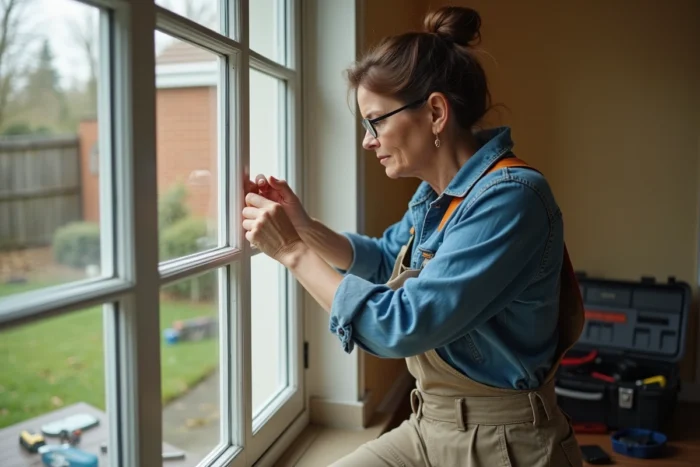
- Exterior joinery seals: a window seal that is peeling allows air and water to pass through. A simple test is to slide a piece of paper between the movable and fixed parts: if the paper slides freely, the seal is no longer functioning
- Sewage inspection access: clear access and annual visual inspection allow for the detection of a clog before backflow occurs
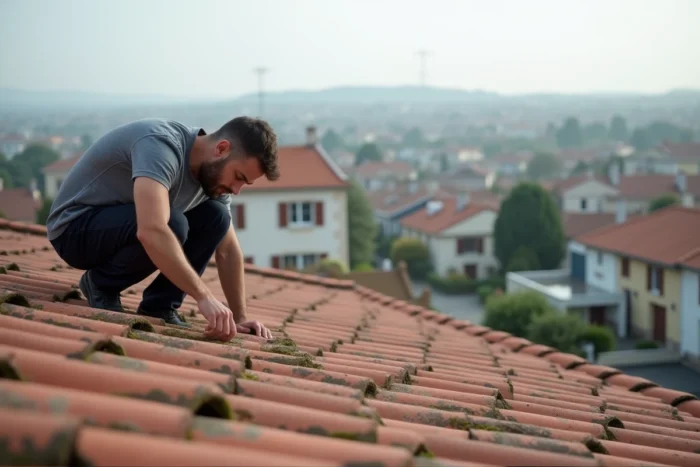
- Roof visible from the ground: spotting displaced tiles or moss spots with binoculars after each windy episode prevents discovering a ceiling leak
Preventive maintenance always costs less than a repair after damage. A blocked drain, a failing seal, or a clogged gutter are issues that can be resolved for a few euros, which, if left unattended, can lead to significant structural damage. The best reflex is to set two dates a year, such as when the clocks change, to thoroughly check all external inspection points.