
When looking for an organic cotton t-shirt or a bag made from plant-based materials, the first instinct is often to check the label. Materials, place of manufacture, certifications: this information determines the actual durability of a garment. Ethical fashion trends are no longer just about color or cut choices. They involve production constraints, recent regulations, and concrete decisions regarding natural materials.
Anti-fast fashion law: what it changes for choosing your clothes
France has definitively adopted its anti-fast fashion law, and its effects will be felt directly on the shelves. The text provides for a financial penalty of up to 20 euros per item by 2030, capped at 50% of the price excluding taxes. Brands that mass-produce low-cost clothing will see their prices increase mechanically.
The other aspect concerns communication. Starting January 1, 2027, all advertising for fast fashion will be prohibited, including through influencers and “haul” videos on social media. Brands will also have to display awareness messages (sobriety, repair, reuse) and the origin of manufacture, in a font size identical to that of the price.
For us, consumers, this law reshuffles the cards. Ethically made clothing produced in short supply chains or from sustainable materials becomes comparatively more competitive. You can find pieces that already meet these traceability and natural material criteria on the Zaturelle fashion site, without waiting for the penalty to take effect.

Natural and plant-based materials: beyond organic cotton
Organic cotton remains a reliable benchmark. It consumes less water than conventional cotton and excludes synthetic pesticides. However, the ethical fashion trend is pushing towards other fibers, less known and sometimes more suitable for certain uses.
Cork, hemp, linen: three materials to compare
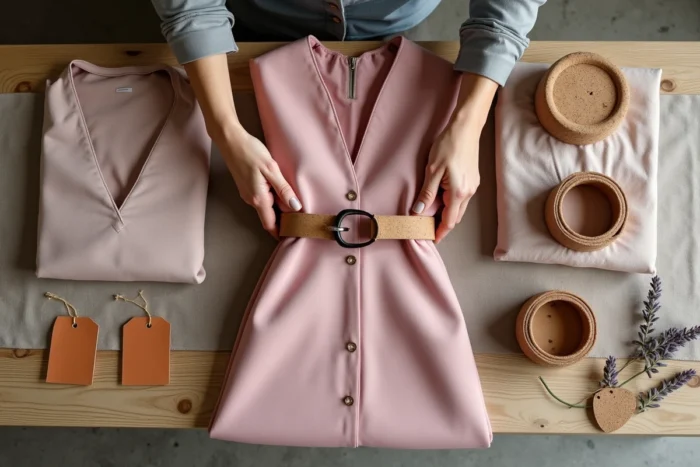
Cork stands out for its lightness and natural waterproofness. It is found in bags, wallets, and shoe soles. Its harvesting does not fell the tree (the cork oak regenerates), making it a strictly renewable material.
Hemp grows without artificial irrigation and naturally resists pests. Its fibers produce a sturdy textile, suitable for workwear or everyday accessories. Linen, primarily grown in Western Europe, offers a fluid drape that is suitable for summer pieces.
- Cork is suitable for rigid accessories (structured bags, belts, jewelry) due to its hold and water resistance.
- Hemp adapts better to pieces that undergo repeated friction, as its fiber strengthens with washing.
- Linen remains the most breathable fiber for clothing worn directly against the skin in warm weather.
Kering, the luxury group, is even working on leather made from mushrooms and pigments derived from microorganisms. These innovations are currently confined to the high-end segment, but they herald a diversification of responsible materials in the coming years.
European textile regulation: the obligations to know
The European Strategy for Sustainable and Circular Textiles sets a clear course. By 2030, all textiles placed on the market in the European Union must be sustainable, repairable, recyclable, and largely made from recycled fibers. This is no longer a voluntary brand commitment; it is a regulatory obligation being rolled out.
Extended producer responsibility (EPR textile) now requires brands to finance the collection, sorting, and recycling of the clothing they place on the European market. Specifically, a brand selling pants in France must financially contribute to ensuring that those pants are collected and processed at the end of their life.
For a responsible style, these rules facilitate identification. A brand compliant with EPR textile displays its commitments to collection and recycling. If this information is absent, it is a warning signal. One can verify a brand’s compliance by searching for its registration number with the textile eco-organization in its country.
Building an ethical style daily: concrete trade-offs
Buy less but better; we hear this phrase everywhere. In practice, it means prioritizing your needs before consulting collections.
Prioritize high-rotation pieces
Clothing worn several times a week (t-shirts, underwear, walking shoes) deserves an investment in durable materials. An organic cotton or hemp t-shirt will withstand dozens of washes without losing its shape. In contrast, a piece worn twice a year does not justify the same budget.
Check the label beyond the certification
Labels (GOTS, Oeko-Tex, Fair Trade) provide a first indication. But the origin of manufacture displayed next to the price will soon be mandatory in France thanks to the anti-fast fashion law. In the meantime, we can already favor brands that publish their supply chain.
- Check the exact composition of the fabric (percentage of natural versus synthetic fibers).
- Identify the country of manufacture and see if the brand publishes the list of its workshops.
- Consult the return and repair conditions offered by the brand, a sign of commitment to the product’s durability.
Returns vary on this point, but eco-responsible brands that offer an integrated repair service generally show better longevity of their pieces, which reduces the cost per use.
Ethical and natural fashion does not require a complete overhaul of your wardrobe. Gradually replacing worn pieces with clothing made from durable materials, checking traceability before purchase, and considering new regulatory obligations: these three reflexes are enough to steer your style towards responsible consumption without sacrificing comfort or aesthetics.