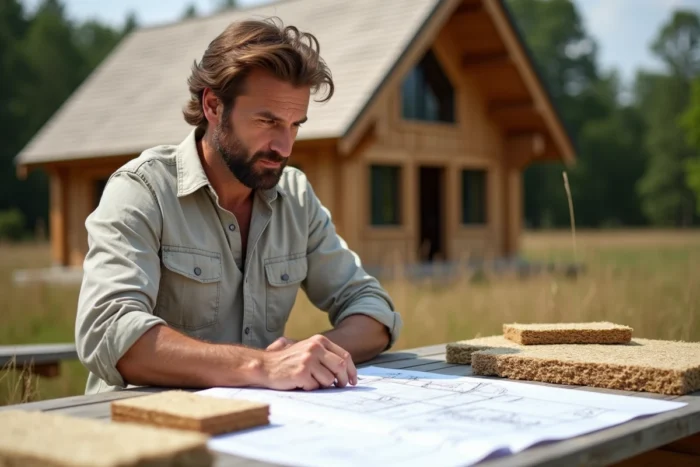
A house that consumes very little energy, built with low environmental impact materials: this is no longer a niche project. Since the implementation of RE2020, all new constructions must meet strict energy performance and carbon footprint thresholds. Building an eco-friendly house is therefore less about adding green options and more about designing a coherent building from the outset, from the land to the heating system.
RE2020 and eco-friendly houses: the regulatory framework changes the game
Many articles present eco-friendly housing as a voluntary choice. In reality, RE2020 already imposes a performance baseline close to eco-construction. This regulation governs primary energy consumption (heating, hot water, lighting, ventilation) and sets a carbon emissions ceiling over the entire lifecycle of the building.
In practical terms, this means that a building permit submitted today requires compliance with these standards. The additional cost often attributed to eco-friendly houses decreases, as “standard” construction already incorporates some of the solutions (enhanced insulation, limited use of fossil fuels for heating).
So where is the difference between a house that is simply compliant and one that is truly eco-friendly? In the choices that go beyond the minimum: bio-sourced materials, water management, local energy production, advanced bioclimatic orientation. Detailed resources on these approaches are available at https://maisonfutureco.fr/, which compiles technical sheets on sustainable construction.
Choice of construction materials: wood, bio-sourced, and local supply chains
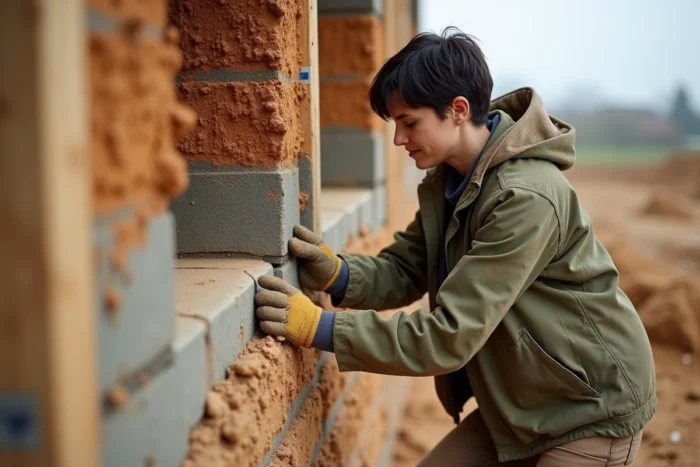
The choice of materials represents the most direct lever for reducing a house’s carbon footprint. Are you hesitating between a wooden frame and a traditional concrete wall? The difference is not only about insulation.
Wood as a load-bearing structure
Wood stores carbon instead of emitting it during its production. A wooden frame offers good mechanical strength and natural thermal insulation capacity. It also allows for a faster construction process, with less waste on site.
Wood remains the most mature eco-friendly material in the construction sector. Its availability in short supply chains depends on the region, which influences transportation costs and thus the overall carbon balance.
Bio-sourced insulators
Beyond the structure, insulation determines energy consumption over the entire lifespan of the building. Several bio-sourced insulators replace mineral wools or polystyrene:
- Wood fiber, which offers good thermal phase shift (it slows the penetration of summer heat into the walls).
- Cellulose wadding, made from recycled paper, suitable for attics and walls by blowing.
- Hemp or straw, used as infill in frames, with a very low carbon footprint at production.
A well-installed bio-sourced insulator protects as effectively as a conventional insulator. The key lies in the implementation: continuity of the envelope, treatment of thermal bridges, appropriate vapor barrier.
Energy and water: two areas to consider from the design stage
Why think about energy and water even before pouring the foundations? Because the decisions made at this stage condition the bills and environmental impact for several decades.
Energy production and heating
An eco-friendly house aims to reduce its energy needs before seeking to produce it. Insulation and air tightness come first. Then, the choice of heating system adapts to the level of performance achieved.
A heat pump covers heating and hot water needs with high efficiency. Photovoltaic solar panels complement the system by producing electricity on-site. The combination of the two allows some houses to become “positive”: they produce more energy than they consume over the year.
Water management
Rainwater harvesting remains underutilized in most new projects. An underground tank system supplies irrigation, toilets, and washing machines. Harvesting rainwater significantly reduces potable water consumption, especially in regions where summer droughts recur.
Budget for an eco-friendly house: initial extra cost versus savings over time
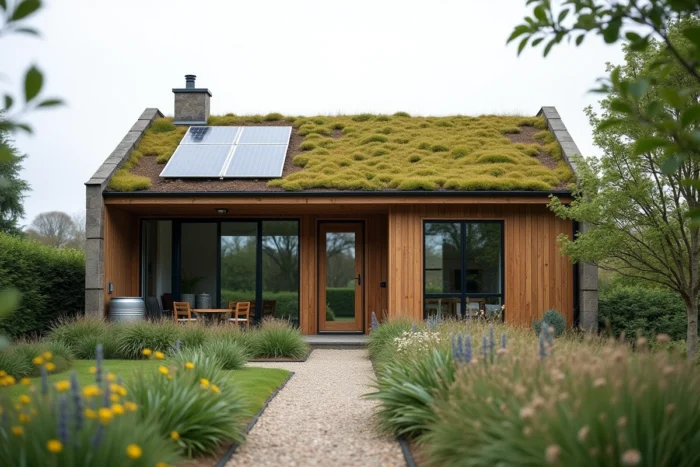
The construction cost of an eco-friendly house exceeds that of a conventional construction. This extra cost mainly comes from bio-sourced materials, energy production equipment, and more technical implementation.
In return, operating costs decrease significantly. A well-insulated house with an efficient heating system consumes very little energy. Over a period of ten to fifteen years, savings on bills often offset the construction extra cost.
On the financial aid side, several schemes exist to lighten the initial investment:
- The eco-PTZ finances certain heavy energy works (insulation, joinery, renewable systems).
- Energy savings certificates (CEE) offer bonuses paid by energy suppliers.
- Local aids sometimes complement these schemes, depending on the municipality or region.
The decision often lies between investing more at construction or accepting higher bills for years. From both a financial and environmental perspective, the ecological extra cost pays off, while under-investment in insulation never does.
Building an eco-friendly house in 2025 is no longer just a personal conviction. Regulations set a high baseline, bio-sourced material supply chains are structuring, and local energy production tools are mature. The real choice lies in the degree of ambition beyond the regulatory minimum and in the coherence between the land, orientation, materials, and equipment. It is this coherence that distinguishes a simply compliant house from a truly sustainable habitat.